Quit Making Your Training Completely Objective
I want you to understand how underrated and critical it is for you to be self-regulating your exercise!
Your body is a complex system that takes in all sorts of inputs from different dimensions: psychological stress, social stress, physical stress, current sleep, current nutrition, training history, the presence of an injury, etc. Your capacity to handle training will vary from day to day, week to week. Here's a graphic from a research paper that I love to help illustrate this:
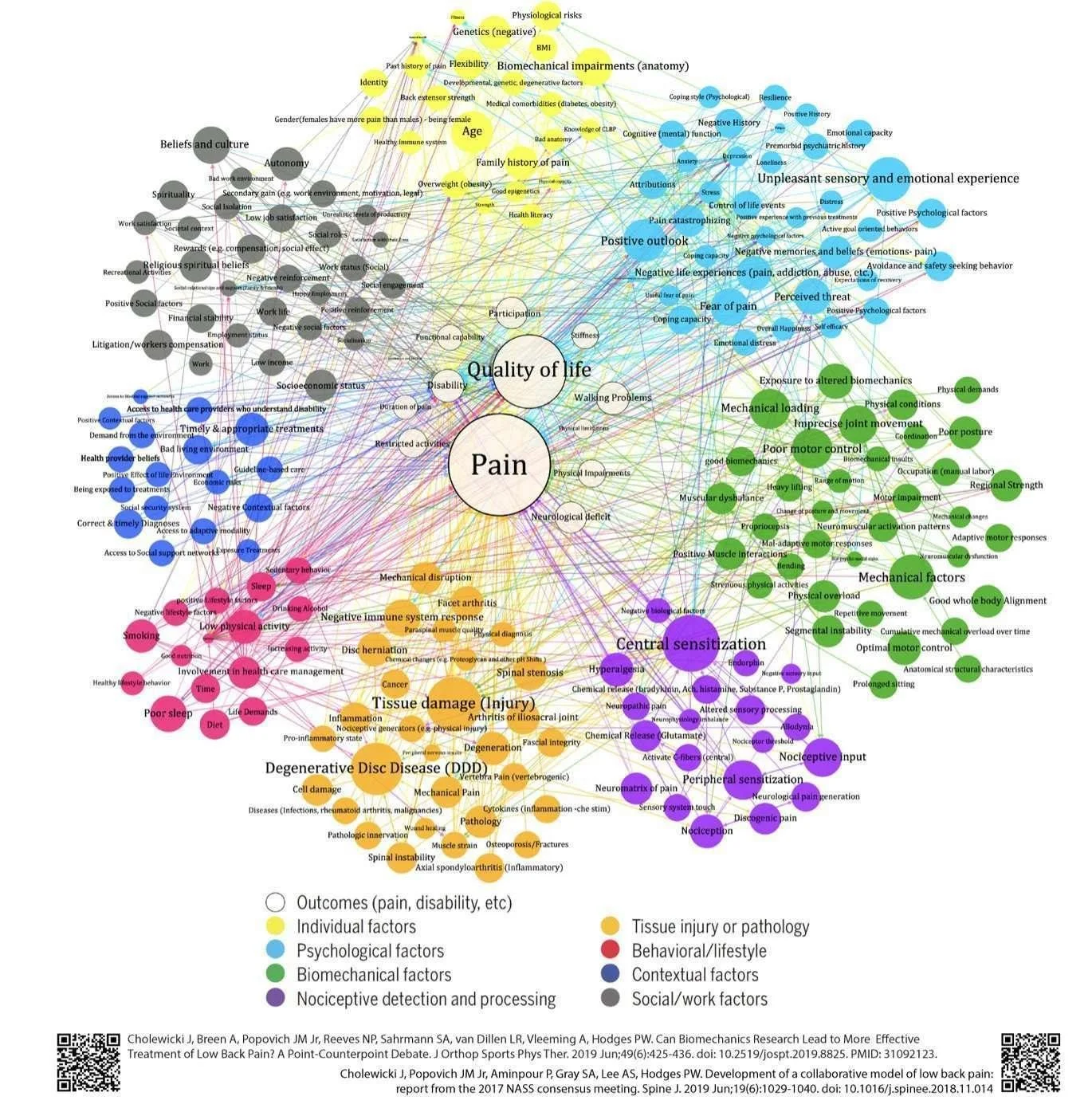
In that same vein, basing your training session off completely OBJECTIVE metrics completely ignores the SUBJECTIVE elements of your body to show up from day to day.
The amount of weight on the bar, your pace per mile while running, how many V5s you sent this session, even the exact number of reps and sets you perform are all completely objective metrics.
Here’s a hard reality that’s going to be present for the overwhelming majority of people: the days where you show up feeling 100% ready to go are going to be few and far between compared to the days where you’re not 100% ready.
The solution? Use subjective metrics to guide your session.
One metric is your Rate of Perceived Exertion (RPE).
Think about that phrase. How hard are you actually exerting yourself? What’s your actual effort level? Rate that effort 1-10, 10 being the hardest exertion you could possibly express, 0 being laying down, no effort. See this chart:
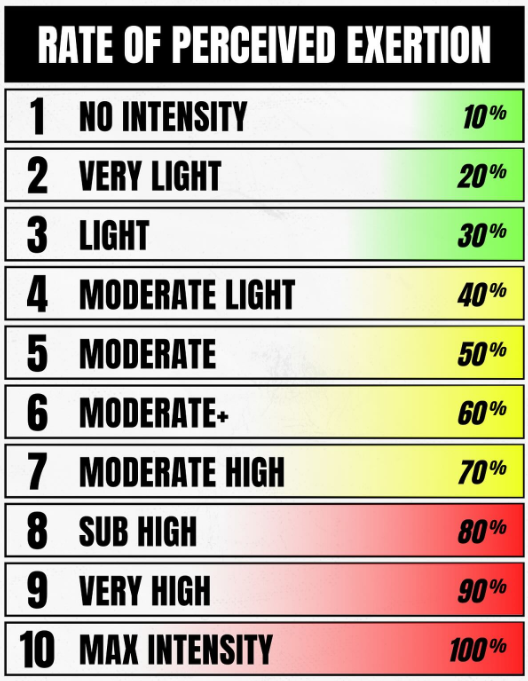
Ignore the objective elements of your exercise.
- How HARD did it FEEL to run at that pace?
- How HARD did it FEEL to climb that grade?
- How HARD did it FEEL to lift that number of reps at that weight?
Very broadly speaking, a good training session should have a cumulative RPE of 5-8, all things told. Moderate-Hard to Hard. This is intense enough to ensure that your system will get enough training input to lead to positive adaptations, but not so much that it will be overly difficult to recover from. You should not be trying your hardest every session. Frankly, trying your hardest (RPE 10) should be so hard that you can’t do it every session.
From this lens, the objective elements of your training are largely arbitrary.
If you’re new to using RPE, it takes a bit of practice to nail it down, just like anything else. It will feel awkward at first. But with time, repetition, and focus, it will become more natural.
To level up your use of RPE, each set of an exercise can be assigned an RPE value. Each route you climb. Each interval of cardio.
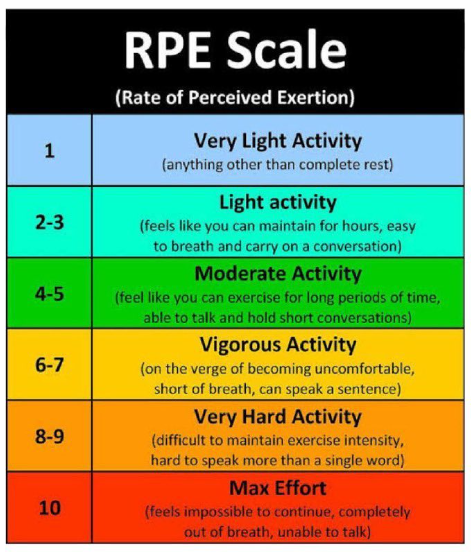
For aerobic (cardio) activities, your breathing is an excellent metric to use as an adjunct for RPE:
For resistance training, RPE becomes a similar metric called Reps in Reserve (RIR). Some people even use these terms interchangeably.
Reps in Reserve: The number of remaining reps in a given set until you reach task failure (i.e. you CANNOT perform another rep). This is different from “it burns so much that I want to stop” or “that felt effortful, so I’ll choose to stop”.
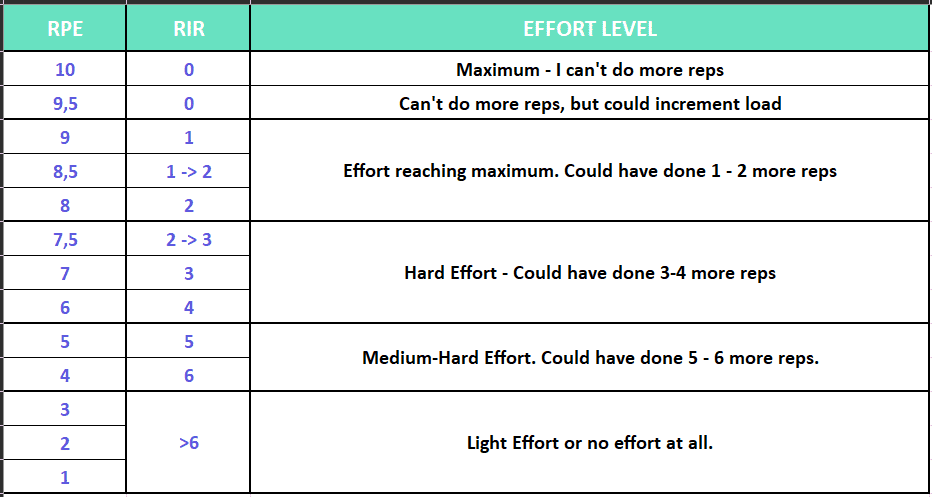
Good strength training is typically performed to at least 4-5 Reps in Reserve, but not all the way to 0 Reps in Reserve.
There are other nuances to using RPE to train for other adaptations. But this is the baseline you would need to get started in the broadest sense.
Today, quit prioritizing the objective measures of your training to define the “right” amount of training to be doing. Get started with a session RPE. It will revolutionize your training. It will immediately make you more resilient. Save this guide so that you can come back to it during your next training session. Give it a try.
And if part of this doesn’t make sense or it feels like something is missing, contact me! I would love to help clarify!
